Recurrent painful swelling below the jaw during meals often indicates a salivary stone or chronic infection. Removing the gland provides a permanent cure.
Head & Neck Surgery
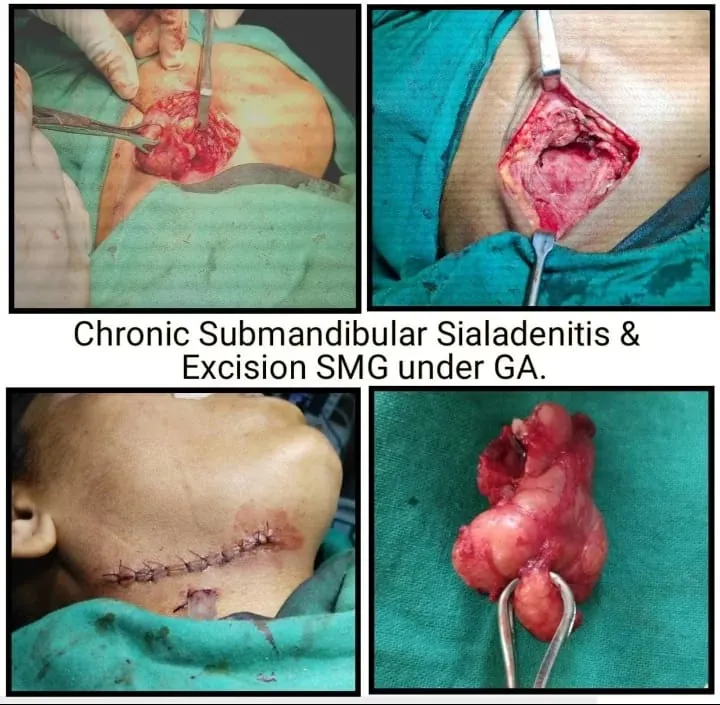
Submandibular Gland Excision
Removal of the submandibular salivary gland for stones, infection or tumours.

About Submandibular Gland Excision
AnaesthesiaGeneral
Duration1 – 1.5 hours
Hospital stay1 – 2 nights
Back to routine1 – 2 weeks
When is it recommended?
- Swelling under the jaw while eating
- Salivary gland stones
- Chronic gland infection
- Gland tumour
How the procedure is done
- 1
Evaluation
Ultrasound and other tests confirm stones, chronic infection or a tumour in the gland.
- 2
Neck incision
A small cut is made in a natural crease below the jaw line.
- 3
Gland removal
The gland is removed while protecting nearby nerves of the lip, tongue and taste.
- 4
Closure
The wound is closed neatly; a small drain may be kept for a day.
Benefits
Permanent cure for recurrent painful swelling
Removes stones and chronic infection
Other salivary glands keep the mouth moist
Neat scar under the jaw
Recovery & aftercare
Mild swelling and discomfort settle within 1–2 weeks. Eating normally is encouraged early. The scar under the jaw is usually well hidden.
Related conditions
Frequently asked questions
No. Several other salivary glands continue to produce saliva.
Some stones near the floor of the mouth can be removed from inside the mouth; deeper or recurrent problems may need gland removal.
This page is for general patient information and does not replace a medical consultation. The right treatment depends on your examination and test results.
Struggling with an ear, nose or throat problem?
Get an expert opinion from an ENT surgeon trained in endoscopic, microscopic and coblation techniques.
