FESS restores natural drainage of the sinuses using endoscopes through the nose. It is the gold-standard treatment for chronic sinusitis and nasal polyps that do not respond to medicines.
Nose & Sinus Surgery
Functional Endoscopic Sinus Surgery (FESS)
Minimally invasive sinus surgery to open blocked sinuses and remove nasal polyps.
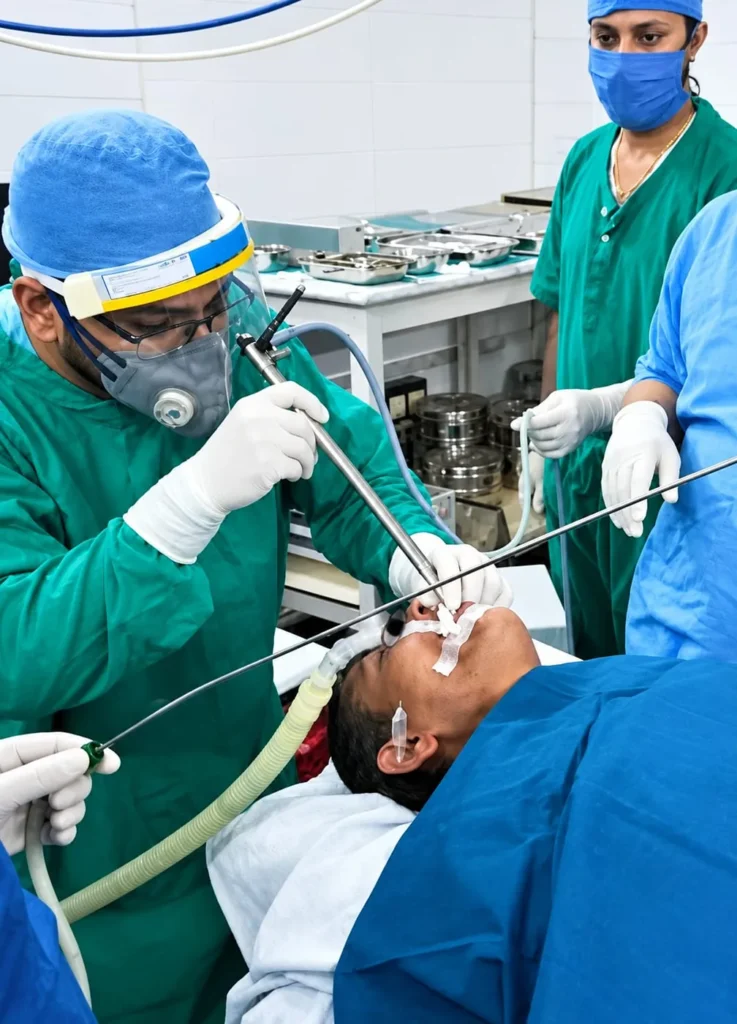

About Functional Endoscopic Sinus Surgery
AnaesthesiaGeneral
Duration1 – 2 hours
Hospital stay1 night
Back to routine1 – 2 weeks
When is it recommended?
- Chronic sinusitis
- Nasal polyps
- Loss of smell
- Persistent facial pain & post-nasal drip
How the procedure is done
- 1
CT scan & planning
A CT scan of the sinuses maps the blockage and the safe surgical path.
- 2
Endoscopic access
Thin endoscopes are passed through the nostrils — no cut on the face.
- 3
Opening the drainage pathways
Blocked sinus openings are widened and polyps or diseased tissue removed, preserving healthy lining.
- 4
Post-operative cleaning
Saline rinses and endoscopic cleaning at follow-up keep the sinuses open while healing.
Benefits
No facial cuts or scars
Better breathing and sense of smell
Fewer sinus infections and headaches
Allows medicines and rinses to reach the sinuses
Recovery & aftercare
Expect nasal blockage and some crusting for 1–2 weeks. Regular saline rinses are essential. Follow-up cleaning visits are an important part of a good long-term result.
Related conditions
Frequently asked questions
Most patients get long-lasting relief. Allergy control and nasal care after surgery reduce the chance of recurrence, especially with polyps.
Pain is usually mild; most patients describe pressure and blockage rather than pain.
This page is for general patient information and does not replace a medical consultation. The right treatment depends on your examination and test results.
Struggling with an ear, nose or throat problem?
Get an expert opinion from an ENT surgeon trained in endoscopic, microscopic and coblation techniques.
